Overview: Why Membrane Choice Matters
A membrane is only one component of a complete roofing assembly, but its characteristics influence how the roof is designed, installed, inspected, and maintained. TPO is a thermoplastic membrane whose adjoining sheets can be heat-welded. EPDM is a synthetic rubber membrane known for flexibility and a long history in low-slope roofing.
Both can provide effective commercial waterproofing when properly designed and installed. The differences become important when you consider climate, rooftop activity, energy objectives, building use, substrate conditions, and how the roof will be maintained over time.
| Feature | TPO | EPDM |
|---|---|---|
| Material Type | Thermoplastic membrane | Synthetic rubber membrane |
| Seam Approach | Heat-welded seams | Seams typically joined using system-specific adhesives or tapes |
| Common Surface | Often selected in reflective colors | Traditionally black; other configurations are available |
| Notable Characteristic | Weldable thermoplastic seams | Flexibility and elasticity |
Option A: TPO Roofing
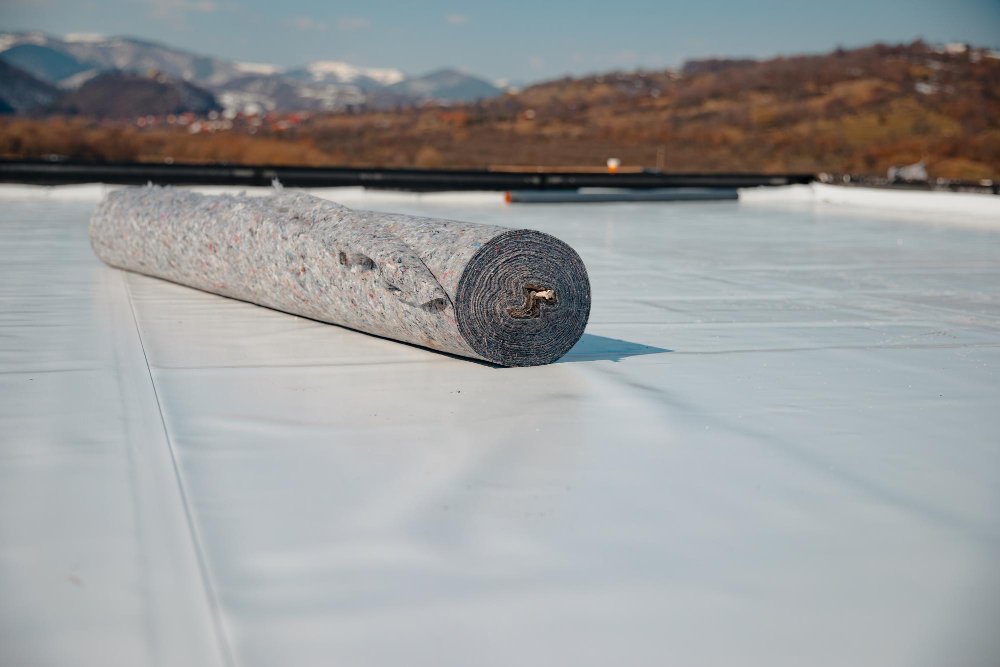
TPO has become a familiar sight on modern commercial buildings. Its thermoplastic construction allows membrane sheets to be joined with heat-welded seams, creating a continuous roofing surface when installation is performed correctly. Light-colored TPO membranes can also provide high solar reflectance, which may be valuable when the broader roof assembly and climate make reducing rooftop heat absorption a priority.
That doesn’t mean TPO automatically makes a building energy efficient. Insulation, air leakage, HVAC performance, climate, and building operations all influence energy use. Reflectivity is one performance characteristic within a much larger building system.
Pros of TPO
- Heat-welded seam technology.
- Reflective membrane options.
- Suitable for many commercial low-slope roofs.
- Can accommodate numerous rooftop configurations.
- Established inspection and repair methods.
Cons of TPO
- Seam quality depends heavily on installation technique.
- Roof performance varies with membrane specification and complete assembly design.
- Improper detailing around penetrations can compromise otherwise sound membrane areas.
- Reflectivity alone doesn’t determine whole-building energy performance.
Winner Highlight: Reflective Surface Options
TPO takes this category when a project specifically prioritizes a readily available light-colored, reflective membrane as part of its roof design. The actual energy benefit, however, must be evaluated in the context of climate and the complete building envelope.
Option B: EPDM Roofing
EPDM approaches low-slope roofing differently. Instead of a thermoplastic membrane, it uses synthetic rubber valued for flexibility and its ability to accommodate building and temperature-related movement. It has been used in commercial roofing for decades, giving contractors and facility managers extensive practical experience with its installation and maintenance.
Traditional EPDM installations often present large, relatively simple membrane fields, although details around seams, edges, drains, and penetrations remain critical. As with TPO, material reputation cannot compensate for poor system design or workmanship.
Pros of EPDM
- Flexible synthetic rubber construction.
- Long history of commercial roofing use.
- Can accommodate thermal and structural movement.
- Well-established repair and maintenance practices.
- Suitable for many low-slope commercial applications.
Cons of EPDM
- Traditional black membranes absorb more solar radiation than highly reflective white membranes.
- Seam construction differs from heat-welded thermoplastic systems.
- Compatibility with rooftop substances must be evaluated for the specific facility.
- Performance still depends on drainage, flashing, insulation, and installation quality.
Winner Highlight: Flexibility
EPDM takes this category when membrane flexibility and accommodation of movement are central project priorities. Building conditions still need to be evaluated before translating that material advantage into a final system recommendation.
Side-by-Side Comparison
TPO and EPDM can both provide reliable protection for commercial low-slope roofs, but they achieve that performance differently. The best choice becomes clearer when the comparison moves beyond product names and focuses on the conditions the roof will actually face.
| Decision Factor | TPO | EPDM | Advantage |
|---|---|---|---|
| Seam Technology | Heat-welded | Adhesive/tape-based system details | TPO |
| Membrane Flexibility | Good | A defining material strength | EPDM |
| Reflective Options | Commonly specified | Available, but traditional systems are often black | TPO |
| Track Record | Established modern commercial system | Long commercial service history | EPDM |
| Maintenance | Routine professional inspection required | Routine professional inspection required | Tie |
| Universal Best Choice? | No | No | Building-specific |
There is also a third option worth remembering. PVC is another thermoplastic membrane with heat-welded seams, and its resistance to certain oils, greases, and chemicals can make it particularly relevant for restaurants, food-processing operations, and some industrial environments. If rooftop exposure is unusual, limiting the evaluation to TPO and EPDM could overlook a better match.
That’s why property owners comparing Commercial Flat Roof Membranes should evaluate the operating environment before narrowing the material choices. What reaches the roof, how often technicians access it, how water drains, and what lies beneath the membrane can all influence the final recommendation.
| Building Priority | Option to Evaluate First | Reason |
|---|---|---|
| Highly reflective membrane | TPO | Light-colored reflective options are commonly specified. |
| Membrane flexibility | EPDM | Synthetic rubber offers notable elasticity. |
| Exposure to certain oils or grease | PVC | Its chemical-resistance characteristics may suit demanding environments. |
| Unknown existing roof conditions | Inspect first | Material selection should follow evaluation of the roof assembly. |
Winner Highlight: Overall Value
There is no universal winner. TPO may lead when reflective surfaces and heat-welded seams are priorities. EPDM may lead when flexibility and a long-established service history matter most. PVC deserves consideration where particular chemical or grease exposures influence membrane selection.
Choosing the Right Membrane for Your Building
The final recommendation should begin with the roof, not the brochure. A professional evaluation should consider existing membrane and substrate conditions, insulation, drainage, rooftop equipment, penetrations, expected traffic, climate exposure, maintenance history, and future building plans.
Once those conditions are understood, material differences become useful rather than theoretical. TPO, EPDM, and PVC each offer legitimate advantages, but **installation quality and complete assembly design can matter as much as the membrane name printed on the specification.**
For commercial property owners, the strongest decision is therefore not choosing the material that wins the most categories. It’s selecting the system whose characteristics align most closely with the demands of the building—and then protecting that system through professional installation, regular inspections, and preventive maintenance.